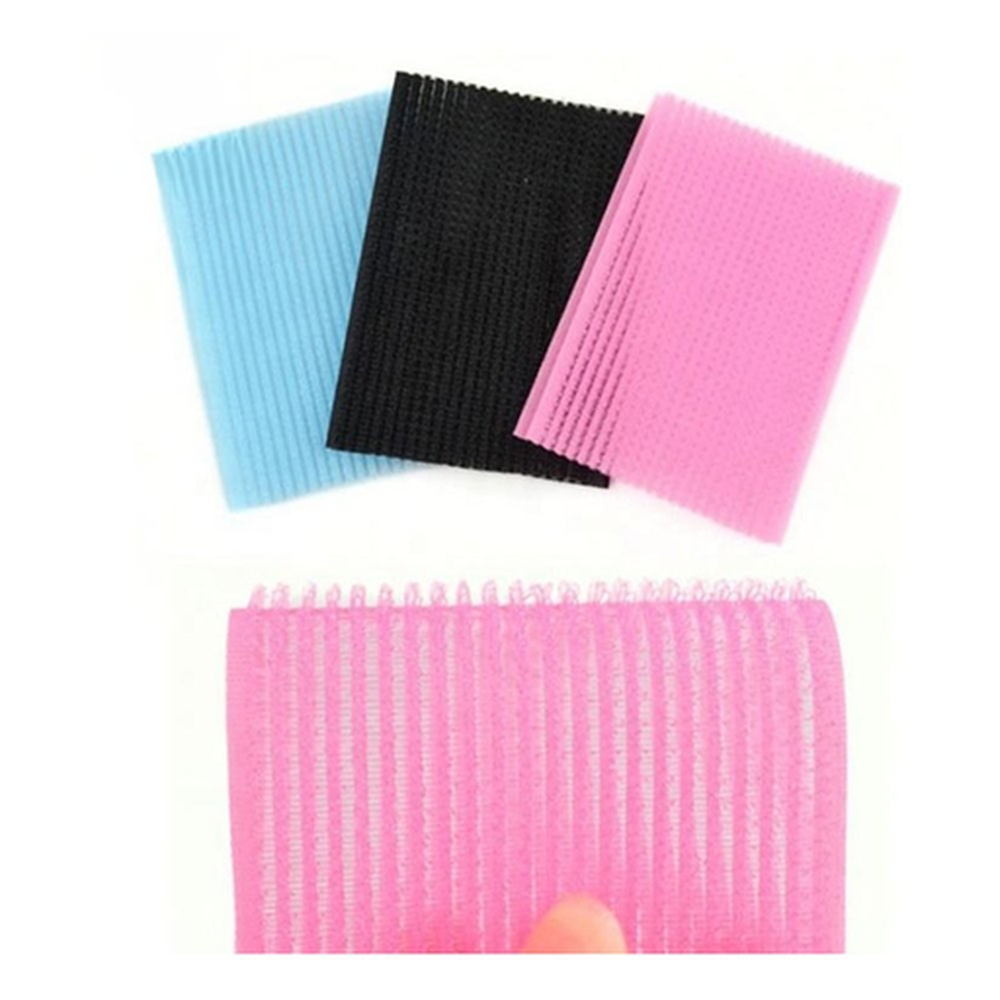
Mounting Adhesive Hook and Loop Dots
Mounting Adhesive Hook and Loop Dots in stock colours. Woven hook and loop, samples in 7 days, MOQ 500 pcs.
| Construction | Adhesive Hook and Loop Dots |
| MOQ | 500 pcs stock colour / 3,000 pcs dyed |
| Minimum order | 500 pcs stock colour / 3,000 pcs dyed |
Not ready to ask for a price? Just ask a question — an engineer replies, not a sales script.
Specification
| Construction | Adhesive Hook and Loop Dots |
|---|---|
| MOQ | 500 pcs stock colour / 3,000 pcs dyed |
| Minimum order | 500 pcs stock colour / 3,000 pcs dyed |
| Production lead time | 2-3 weeks after sample approval |
| Packing | Poly bag + carton, palletised for LCL |
| Certification | REACH, RoHS; OEKO-TEX on request |
What makes it different
- Width and colour set per order
- Lot report with every carton
- Samples in 7 days
Other sizes in this construction
Same build, different width or length. Mixed sizes in one carton are fine.
This item is quoted individually — send the size you need.
Need a custom width or die profile?
Send a drawing and we will confirm tooling cost and tolerance before you commit.
Talk to an engineerAbout this product
Adhesive hook and loop dots at the standard diameters in a stock colour, punched rather than cut, so the edge is clean and the adhesive does not creep past the profile in warm storage. Standard diameters run from 10 mm to 50 mm, and anything outside that is a new die rather than a slitting instruction. Send the drawing and we quote the tooling and the part together, because the tooling is a one-off and the part is not.
Where it is used
It is used where a strip would be cut by hand and the cut edge would be inconsistent. A die-cut dot gives every unit the same engaged area, which is what makes a peel specification enforceable at incoming inspection.
Ordering
Quotations are built from three things: the construction, the width and the colour. Change any one of them and the price moves, which is why we ask for all three before quoting rather than sending a range and adjusting afterwards.
How to specify it
To quote this without a round of questions we need four things: the width, the colour, the substrate or the seam it goes into, and the annual volume. The first three decide the construction; only the fourth decides the price band.
Quality control
Colour is matched to a retained standard under D65, not to a screen. Metamerism is real: a black that matches under office light can read green under daylight, which is why the approved standard is a physical swatch rather than a photograph.
Packing and shipping
Liner-backed goods are packed flat rather than on a core where the part is kiss-cut, because a tight wind puts a set into the liner and the parts lift at the edges on the applicator.
If this is a repeat of an existing part, send the drawing or the previous lot number and we will match the construction rather than re-specify it. Re-specifying a part that already works is how a working assembly picks up a new failure mode.
Ordering and shipping
- Sold by the roll, carton or pallet — mixed widths allowed.
- EXW Xiamen, FOB or CIF to your port.
- T/T 30% deposit, balance against copy of B/L.
- Sample orders ship by courier in 7 days.
Choosing this construction
Order by the profile, not the diameter: a round coin suits a drilled or moulded seat, a square resists rotation better on a flat panel, and a custom die-cut shape is what you specify when the part has to be applied the same way every time without a jig. Tooling is a one-off and typically takes 7–10 working days.
Common questions
What is 25 mm hook and loop used for?
At 25 mm this construction is normally specified for furniture trim, panel fixing, mid-weight strap assemblies and equipment covers. The width does not change the peel per unit width much, but narrower tape engages fewer hooks at the edge, which is where peeling starts — so if the joint opens repeatedly, go up one width rather than up one grade.
Kiss-cut or loose parts?
Kiss-cut keeps the parts on a continuous liner for dispensers and pick-and-place heads. Through-cut gives loose parts in a bag, which is cheaper and fine for manual assembly. Tell us which line you are feeding and we will quote the matching format.
What tolerance can you hold?
±0.3 mm on the cut profile and ±0.5 mm on position within the web. Tighter than that is a conversation, not a catalogue item. Watch the adhesive bleed as well: a soft acrylic can creep 0.2 mm past the cut edge in warm storage.
What is the minimum order and lead time?
Minimum order for this item is 500 pcs stock colour / 3,000 pcs dyed. Production runs 2–3 weeks after sample approval, with samples typically shipped in 7 days.
More in Dots, Coins and Die-Cut Shapes
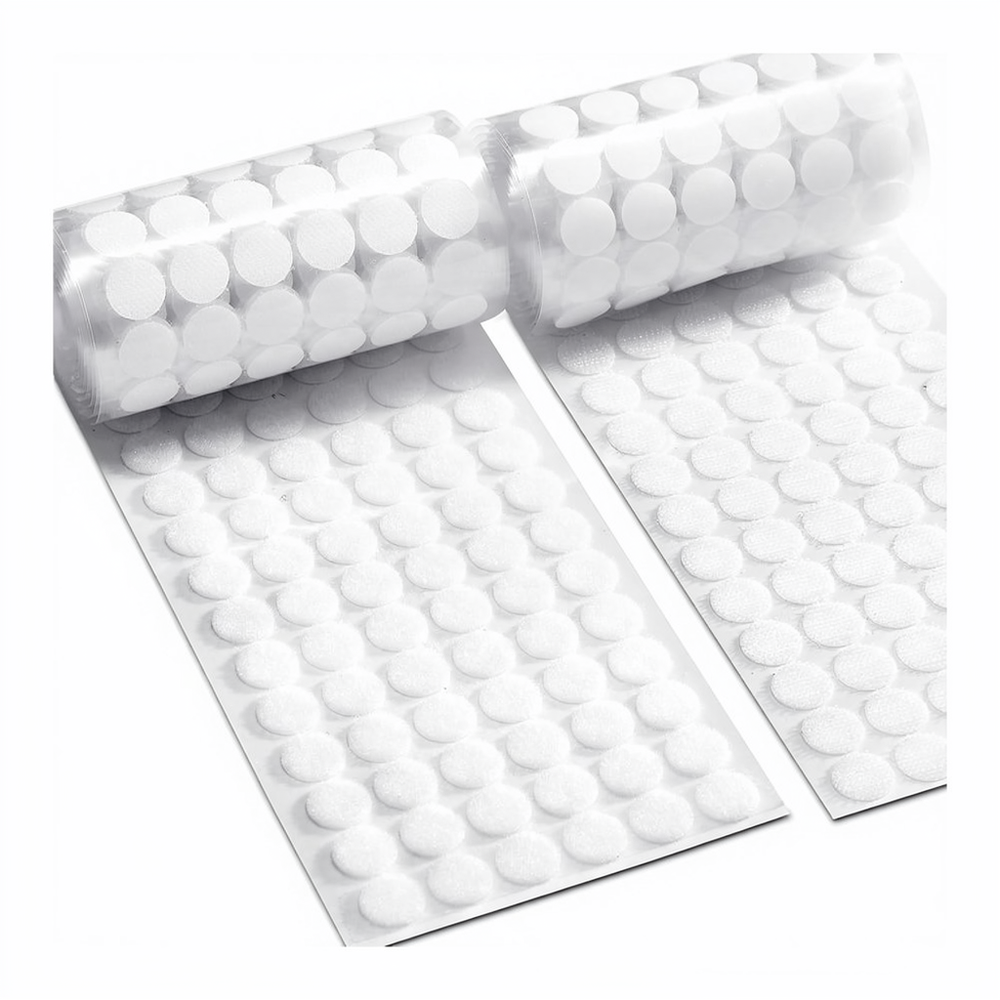 Dots, Coins and Die-Cut Shapes
Double-Sided Waterproof Adhesive Hook and Loop Dots
Double-Sided Waterproof Adhesive Hook and Loop Dots in stock colours. Woven ho...
MOQ 500 pcs stock colour / 3,000 pcs dyed
 Dots, Coins and Die-Cut Shapes
Waterproof Adhesive Hook and Loop Dots
Waterproof Adhesive Hook and Loop Dots in stock colours. Woven hook and loop,...
MOQ 500 pcs stock colour / 3,000 pcs dyed
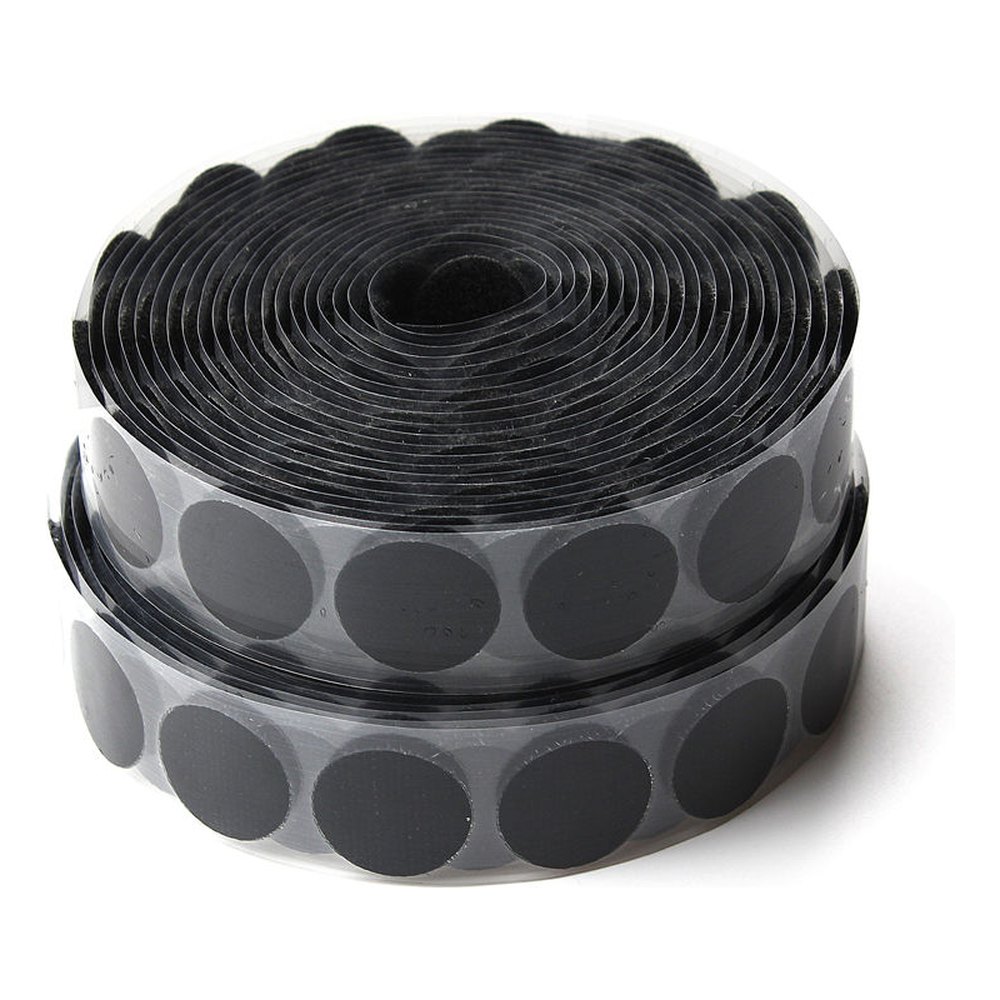 Dots, Coins and Die-Cut Shapes
Elastic Adhesive Hook and Loop Dots
Elastic Adhesive Hook and Loop Dots in stock colours. Woven hook and loop, sam...
MOQ 500 pcs stock colour / 3,000 pcs dyed
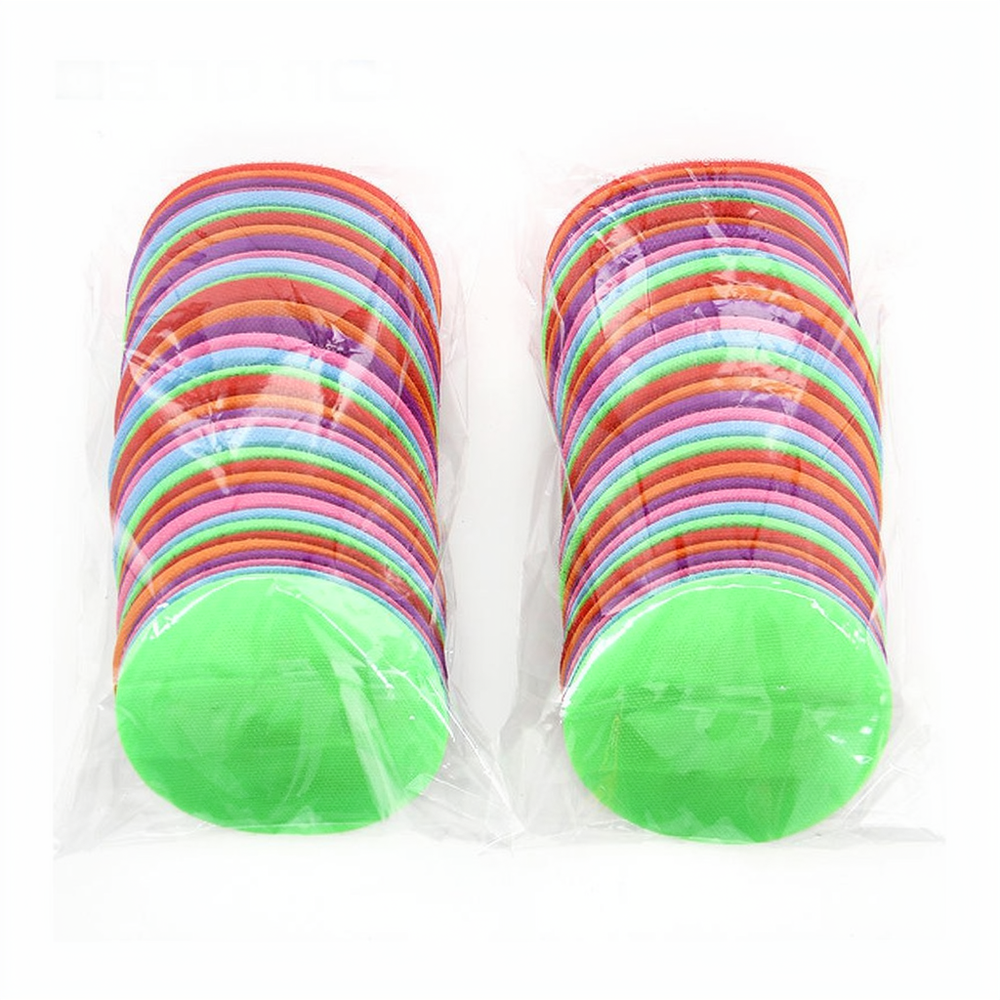 Dots, Coins and Die-Cut Shapes
Adhesive Hook and Loop Dots, Strong Adhesive
Adhesive Hook and Loop Dots in stock colours. Woven hook and loop, samples in...
MOQ 500 pcs stock colour / 3,000 pcs dyed